
Solar Power Leads Africa’s Clean Energy Investments Amid Persistent Electrification Challenges
Africa’s renewable energy sector continues to attract significant investment, with solar energy emerging as the dominant force in clean power development. However, this progress contrasts sharply with the ongoing reality that approximately 600 million Africans remain without access to electricity, highlighting a critical gap between investment flows and universal energy access needs.
According to the African Energy Chamber’s (AEC) State of African Energy 2026 Outlook Report, the continent invested $34 billion in clean power technologies between 2020 and 2025, of which 52% was directed toward solar energy and 25% to onshore wind. Utility-scale solar photovoltaic projects have become increasingly competitive, with levelized costs of electricity (LCOE) ranging from $32 to $67 per megawatt-hour in key markets, often undercutting fossil fuel alternatives in countries such as South Africa, Egypt, and Nigeria.
Despite these economic advantages, Africa’s share of global renewable investments stood at just 1.5% in 2025, projected to rise modestly to 2.7% by 2030. This underscores the continent’s underrepresented role in the global energy transition, even as it accounts for nearly one-fifth of the world’s population.
The electrification deficit is particularly severe in rural areas, driven by high infrastructure costs, low population densities, and limited income levels. Sub-Saharan Africa’s electrification rates hover around 54% in East Africa and 59% in West Africa, with several countries—including Burundi, the Central African Republic, and South Sudan—below 30%. This has resulted in distinct energy markets: grid-connected utility-scale projects (approximately 25 GW auctioned by mid-2024) and private agreements (11 GW) primarily serve urban and industrial centers, while off-grid solar solutions for rural communities attracted only $425 million in 2023—less than 2% of grid-connected funding.
Achieving universal electricity access by 2030 would require annual investments exceeding $30 billion, over eight times the current level of approximately $3.7 billion, per International Energy Agency estimates cited in the report. Investor preferences for large-scale projects with stable revenue streams exacerbate this funding disparity, as distributed generation and microgrids face higher risks, including currency fluctuations and payment uncertainties.
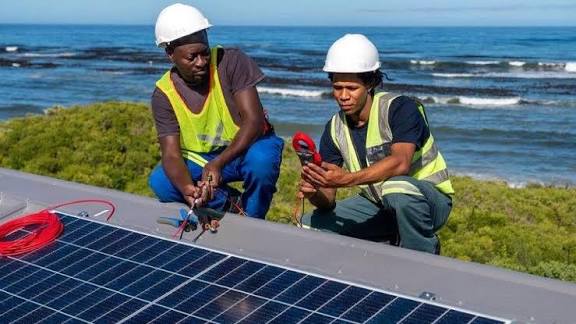
The report emphasizes the need for enhanced local capacity-building through training programs for technicians and engineers to ensure long-term sustainability and job creation. Proven off-grid models, such as pay-as-you-go solar systems in Kenya, Uganda, and Tanzania (e.g., M-KOPA serving over one million households) and community microgrids in Ghana, demonstrate viability but require scaled-up capital.
Initiatives like the World Bank Group and African Development Bank’s Mission 300—aiming to connect 300 million people by 2030—have made strides, connecting 21 million between July 2023 and February 2025, with projects in the pipeline for over 100 million more. However, challenges persist, including setbacks such as the United States’ withdrawal from the Just Energy Transition Partnership in February 2025, canceling $56 million in grants and $1 billion in potential investments.

