
Nigeria Records 7% Year-on-Year Increase in Oil Production for First 11 Months of 2025
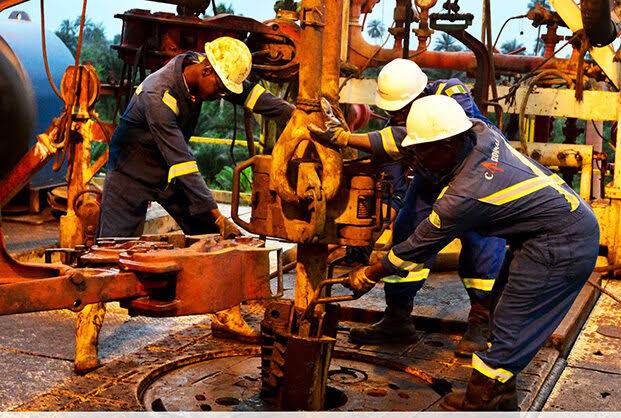
Nigeria’s average crude oil production, including condensates, rose by 7% year-on-year to 1.652 million barrels per day (mbpd) in the first eleven months of 2025, up from 1.544 mbpd in the corresponding period of 2024, according to data from the Nigerian Upstream Petroleum Regulatory Commission (NUPRC).
This improvement reflects ongoing efforts in enhanced security measures, technology deployment, and upstream sector reforms. On a month-on-month basis, production edged up slightly to 1.599 mbpd in November 2025 from 1.597 mbpd in October 2025.
However, output remained significantly below the 2025 national budget benchmark of 2.06 mbpd, as well as the assumed oil price of $75 per barrel and exchange rate of ₦1,400 to the US dollar.
In response, the Federal Government has adopted more conservative parameters for the 2026 Budget, setting a crude oil price benchmark at $64.85 per barrel, daily production at 1.84 mbpd, and maintaining the exchange rate assumption at ₦1,400 to the dollar.
Presenting the 2026 Budget – themed “Budget of Consolidation, Renewed Resilience and Shared Prosperity” – President Bola Tinubu highlighted positive developments in the sector:
“Oil production has improved, supported by enhanced security, technology deployment, and sector reforms. Non-oil revenues have expanded significantly through better tax administration. Investor confidence is returning, reflected in capital inflows, renewed project financing, and stronger private-sector participation. Our external reserves rose to a 7-year high of about $47 billion as of last month, providing over 10 months of import cover and a more substantial buffer against shocks.”
These trends underscore Nigeria’s gradual recovery in oil output amid global market dynamics, while emphasising the need for sustained reforms to achieve higher production targets and fiscal stability.

